


|
Three Phase Power Transformer
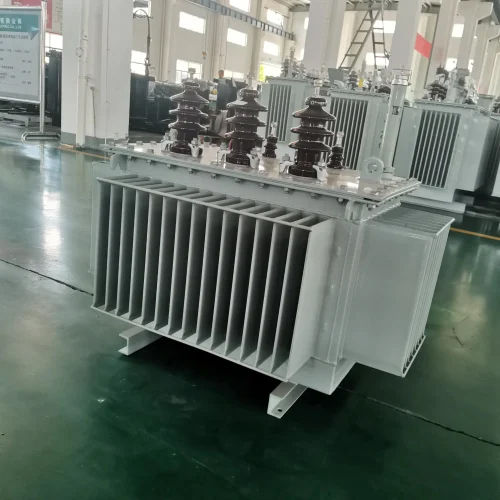

Three Phase Power Transformer Specification
- Voltage Booster Type
- Dry
- Material
- Stainless Steel
- Frequency (MHz)
- 50 Hertz (HZ)
- Efficiency
- High
- Phase
- Three Phase
- Usage
- Industrial
- Power Scope
- Electricity
Three Phase Power Transformer Trade Information
- Minimum Order Quantity
- 10 Units
- FOB Port
- sonipat
- Payment Terms
- Cash Advance (CA), Cash in Advance (CID)
- Supply Ability
- 25 Units Per Month
- Delivery Time
- 15 Days
- Sample Policy
- Contact us for information regarding our sample policy
- Packaging Details
- raping
- Main Export Market(s)
- Asia
- Main Domestic Market
- All India
About Three Phase Power Transformer
A three-phase power transformer is an essential electrical device used to efficiently transfer electrical energy between three-phase AC (Alternating Current) power systems, either stepping up (increasing) or stepping down (decreasing) voltages without altering the frequency. They are a cornerstone of modern power grids, from generation and transmission to distribution and consumption, particularly in industrial and commercial applications due to their superior efficiency and capacity compared to single-phase systems.
What is Three-Phase Power?
Before delving into the transformer, it's important to understand three-phase power. Unlike single-phase power which uses two conductors (phase and neutral) and has a single voltage waveform, a three-phase system uses three alternating currents, each offset in phase by 120 electrical degrees from the others. This creates a more constant and balanced power flow, leading to:
- Increased efficiency: More power can be transmitted with less conductor material.
- Smoother power delivery: Reduces voltage fluctuations and offers greater reliability for loads, especially motors.
- Higher power capacity: Capable of handling larger loads, ideal for heavy machinery.
Construction of a Three-Phase Transformer
A three-phase transformer can be constructed in two main ways:
- Bank of three single-phase transformers: This involves connecting three individual single-phase transformers together. Each single-phase transformer handles one phase of the three-phase system.
- Single unit with a common magnetic core: This is the more common and often more economical approach. It consists of a single laminated steel core with three limbs, and each limb carries both primary and secondary windings for one phase. Low-voltage (LV) windings are typically placed closer to the core for easier insulation, with high-voltage (HV) windings placed over them.
Regardless of the construction type, a three-phase transformer essentially has three sets of primary and three sets of secondary windings.
Working Principle
The operation of a three-phase transformer is based on Faraday's Law of Electromagnetic Induction. When a three-phase alternating current flows through the primary windings, it generates a changing magnetic field within the common core (or individual cores). This changing magnetic flux then induces a voltage (electromotive force or EMF) in the secondary windings wound around the same core. The ratio of the number of turns in the primary and secondary windings determines the voltage transformation (step-up or step-down).
Key Components
Besides the core and windings, other vital parts of a three-phase transformer include:
- Insulation: Electrically separates windings from the core and from each other.
- Transformer Oil (for oil-filled types): Serves as both an insulator and a coolant, preventing electrical arcing and dissipating heat.
- Cooling System: Often involves radiators or fans to cool the transformer oil or the windings directly.
- Tank: Encloses and protects the core and windings, and holds the transformer oil.
- Oil Conservator: A separate vessel to accommodate the expansion of oil due to heating.
- Bushings: Insulated terminals that connect the windings to the external power lines.
- Tap Changer: Allows for slight adjustments to the voltage ratio by changing the number of turns in one of the windings.
- Protective Devices: Such as pressure relief systems and temperature monitoring systems for safety.
Connections (Configurations)
The primary and secondary windings of a three-phase transformer can be connected in various configurations, which impact voltage ratios, phase shifts, and grounding options. The most common connections are:
- Star (Wye or Y) Connection: One end of each winding is connected to a common point called the neutral. This configuration allows for both line-to-line voltage and line-to-neutral voltage (often used for providing 4-wire service). It has a neutral point which can be grounded.
- Delta (Mesh or ) Connection: The three windings are connected end-to-end to form a closed triangular loop. This connection does not have a neutral point inherently but offers good reliability (if one winding fails, the other two can often continue to operate in an "open delta" configuration).
Combinations of these connections are widely used:
- Star-Star (Y-Y): Both primary and secondary are star-connected. No phase shift.
- Delta-Delta (-): Both primary and secondary are delta-connected. No phase shift.
- Delta-Star (-Y): Primary delta, secondary star. Often used for stepping up voltage in transmission systems and for providing a 3-phase, 4-wire service (with a grounded neutral). Introduces a 30 phase shift.
- Star-Delta (Y-): Primary star, secondary delta. Commonly used for stepping down voltage at substations. Introduces a 30 phase shift.
- Open Delta (V-V): Uses two single-phase transformers to create a three-phase output, often used for temporary solutions or smaller loads where a full three-phase bank is not required.
Applications
Three-phase power transformers are indispensable in various sectors:
- Power Generation Plants: Stepping up generated voltage for efficient long-distance transmission.
- Power Transmission Networks: Transmitting high voltage electricity across vast distances.
- Power Distribution Systems: Stepping down high transmission voltages to lower levels suitable for industrial, commercial, and residential consumption.
- Industrial and Commercial Facilities: Powering heavy machinery, motors, heating and cooling systems, and large electrical loads.
- Data Centers: Ensuring a reliable power supply for critical computing infrastructure.
- Renewable Energy Systems: Integrating renewable energy sources (like solar and wind farms) into the grid.
- Railway Electrification: Providing power for electric trains.

Price:
- 50
- 100
- 200
- 250
- 500
- 1000+

More Products in Electrical Power Transformer Category
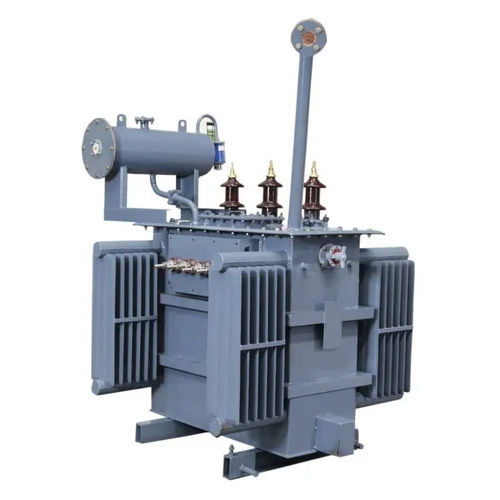
Oil Cooled Transformer
Price 2000000.0 INR / Unit
Minimum Order Quantity : 10 Units
Phase : Three Phase
Voltage Booster Type : Dry
Usage : Industrial
Efficiency : High
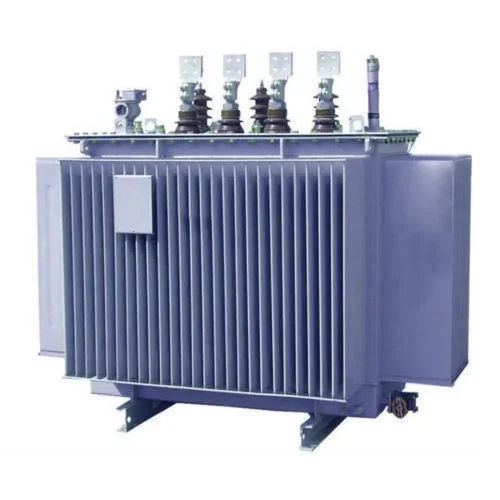
Electrical Power Transformer
Price 2500000.0 INR / Unit
Minimum Order Quantity : 10 Units
Phase : Three Phase
Voltage Booster Type : Dry
Usage : Industrial
Efficiency : High
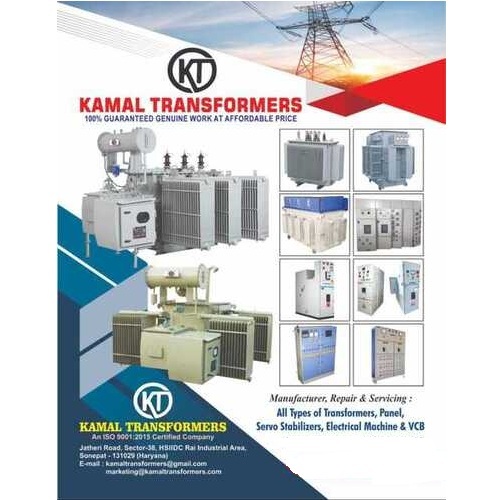
Electrical transformers
Price 250000 INR / Piece
Minimum Order Quantity : 1 Piece
Phase : Three Phase
Voltage Booster Type : Dry
Usage : Transformer
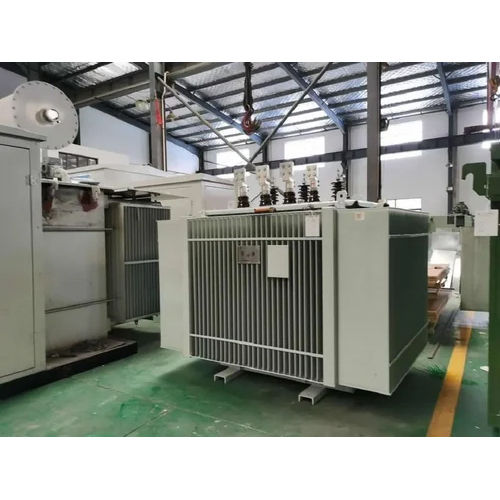
1000 kVA Power Transformer
Price 2000000 INR / Unit
Minimum Order Quantity : 10 Units
Phase : Three Phase
Voltage Booster Type : Dry
Usage : Industrial
Efficiency : High



Contact Details
GST : 06APCPK3923R2ZI
 Send Inquiry
 |
Kamal Transformers
All Rights Reserved.(Terms of Use) Developed and Managed by Infocom Network Private Limited. |
