


|
Electrical transformers
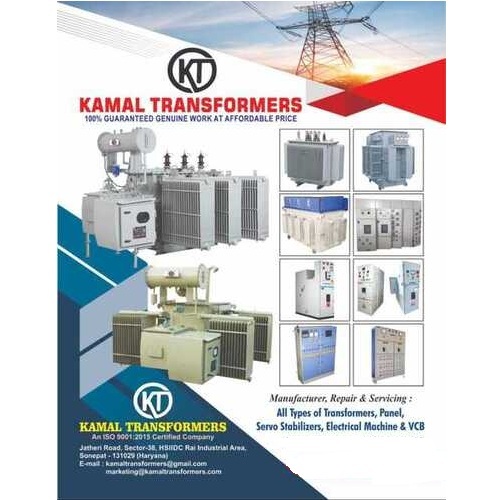

Electrical transformers Specification
- Voltage Booster Type
- Dry
- Product Type
- Dry Type Transformer
- Frequency (MHz)
- 50 Hertz (HZ)
- Phase
- Three Phase
- Usage
- Transformer
- Power Scope
- Electricity
Electrical transformers Trade Information
- Minimum Order Quantity
- 1 Piece
- FOB Port
- sonipat
- Payment Terms
- Cash Advance (CA), Cash in Advance (CID)
- Supply Ability
- 25 Pieces Per Month
- Delivery Time
- 15 Days
- Sample Policy
- Contact us for information regarding our sample policy
- Packaging Details
- raping
- Main Export Market(s)
- Asia
- Main Domestic Market
- All India
About Electrical transformers
An electrical transformer is a static electrical device that efficiently transfers electrical energy between two or more circuits through electromagnetic induction, without a direct metallic connection between them. Its fundamental purpose is to change voltage levels from one alternating current (AC) circuit to another, either stepping up (increasing) or stepping down (decreasing) the voltage, while keeping the frequency constant.
Core Principle: Faraday's Law of Electromagnetic Induction
The operation of an electrical transformer is entirely based on Faraday's Law of Electromagnetic Induction. This law states that a changing magnetic field through a coil of wire induces an electromotive force (EMF), or voltage, across the ends of the coil.
Here's how it applies to a transformer:
- Primary Winding: An alternating voltage is applied to the primary winding, which is a coil of insulated wire wound around a magnetic core.
- Alternating Magnetic Flux: Because the input voltage is alternating (its direction and magnitude change periodically), the current flowing through the primary winding creates a continuously changing magnetic field (or magnetic flux) within the core.
- Magnetic Core: The magnetic core, typically made of laminated sheets of soft iron or silicon steel, provides a low-reluctance path for this magnetic flux. It concentrates and guides the flux, ensuring that it links efficiently with the secondary winding. Laminations are used to reduce energy losses due to eddy currents.
- Secondary Winding: The changing magnetic flux generated by the primary winding cuts across or links with the secondary winding, another coil of insulated wire wound around the same core.
- Induced Voltage: According to Faraday's Law, this changing magnetic flux induces an alternating voltage in the secondary winding.
- Voltage Ratio: The ratio of the number of turns in the primary winding (Np) to the number of turns in the secondary winding (Ns) directly determines the voltage transformation:
- If the secondary winding has more turns than the primary (), the transformer is a step-up transformer, increasing the voltage.
- If the secondary winding has fewer turns than the primary (), the transformer is a step-down transformer, decreasing the voltage.
- The frequency of the AC voltage remains the same from primary to secondary. Ideally, the power transferred from the primary to the secondary circuit is also conserved (neglecting losses).
- If the secondary winding has more turns than the primary (), the transformer is a step-up transformer, increasing the voltage.
Why are Transformers Crucial?
Transformers are fundamental to modern electrical power systems because they enable:
- Efficient Long-Distance Transmission: Electricity is generated at relatively low voltages. To transmit it efficiently over long distances (e.g., from power plants to cities), the voltage is stepped up to very high levels (hundreds of kilovolts). This significantly reduces the current (), which in turn minimizes energy losses (I2R losses) in the transmission lines.
- Safe and Usable Power Delivery: Once electricity reaches urban or industrial areas, the dangerously high transmission voltages must be stepped down to lower, safer, and usable levels for homes, businesses, and factories (e.g., from thousands of volts down to 415V/240V).
Key Components of an Electrical Transformer
While sizes and designs vary greatly, common components include:
- Laminated Core: Provides a path for the magnetic flux. Made of thin, insulated silicon steel sheets to reduce losses.
- Windings (Coils): Insulated copper or aluminum wires wound around the core. There's a primary winding (input) and a secondary winding (output).
- Insulation: Materials (like paper, pressboard, or transformer oil) that electrically isolate the windings from each other and from the core and tank, preventing short circuits.
- Transformer Tank: The robust outer enclosure, typically steel, that houses the core and windings and often contains the insulating and cooling medium (like oil).
- Cooling System: Methods to dissipate heat generated by electrical losses. This can be natural air convection, forced air, oil circulation (natural or forced), or even water cooling for very large units.
- Transformer Oil (for oil-filled types): Serves as both an excellent dielectric insulator and a cooling medium, transferring heat away from the core and windings.
- Conservator Tank: An external tank connected to the main tank, allowing for the expansion and contraction of transformer oil due to temperature changes.
- Breather: Contains a desiccant (like silica gel) to absorb moisture from the air entering the conservator, preventing oil contamination.
- Bushings: Insulated terminals that allow the high-voltage conductors to pass through the grounded transformer tank safely.
- Tap Changer: A mechanism to adjust the turns ratio slightly, allowing for fine-tuning of the output voltage to compensate for input voltage fluctuations or load changes. It can be off-load (adjusted when the transformer is de-energized) or on-load (adjusted while energized).
- Protective Devices: Such as Buchholz relays (detect internal faults by gas accumulation or oil surge), pressure relief devices, and temperature gauges.
Types of Electrical Transformers (Common Classifications)
Transformers are categorized based on various factors:
-
Based on Voltage Transformation:
- Step-up Transformer: Increases voltage, decreases current. (e.g., at power generation stations).
- Step-down Transformer: Decreases voltage, increases current. (e.g., in distribution substations, household adapters).
- Isolation Transformer: Primary and secondary have the same number of turns (), providing electrical isolation between circuits without changing voltage. Used for safety and noise reduction.
- Step-up Transformer: Increases voltage, decreases current. (e.g., at power generation stations).
-
Based on Cooling Medium:
- Oil-Cooled (Oil-Immersed) Transformer: Uses transformer oil for both cooling and insulation (most common for power and larger distribution transformers).
- Dry-Type Transformer: Uses air and solid insulation materials; no liquid oil. Safer for indoor use or environments where fire hazard is a concern.
-
Based on Phase:
- Single-Phase Transformer: Used for single-phase power systems.
- Three-Phase Transformer: Used for three-phase power systems, which are dominant in industrial and commercial applications and for bulk power transmission.
-
Based on Core Material:
- Iron Core Transformer: Uses a laminated iron or silicon steel core for low-frequency applications (e.g., power transformers).
- Air Core Transformer: No physical core; windings are wound on a non-magnetic former. Used in high-frequency applications where magnetic saturation is an issue.
- Ferrite Core Transformer: Uses a ferrite core. Suitable for high-frequency applications (e.g., switch-mode power supplies, radio frequency circuits).
- Iron Core Transformer: Uses a laminated iron or silicon steel core for low-frequency applications (e.g., power transformers).
-
Based on Application:
- Power Transformer: Large, heavy-duty transformers used in transmission networks to step up or step down high voltages.
- Distribution Transformer: Smaller than power transformers, used to step down medium voltages to low voltages for consumer use.
- Instrument Transformers (CT & PT):
- Current Transformer (CT): Steps down high currents to low, measurable levels for meters and relays.
- Potential Transformer (PT) / Voltage Transformer (VT): Steps down high voltages to low, measurable levels for meters and relays.
- Current Transformer (CT): Steps down high currents to low, measurable levels for meters and relays.
- Audio Transformer: Used in audio circuits for impedance matching or signal isolation.
- Pulse Transformer: Used to transmit voltage pulses between circuits.
- Autotransformer: Has a single winding that serves as both primary and secondary, with a portion of the winding common to both circuits. More compact and efficient for small voltage changes.
- Power Transformer: Large, heavy-duty transformers used in transmission networks to step up or step down high voltages.

Price:
- 50
- 100
- 200
- 250
- 500
- 1000+

More Products in Electrical Power Transformer Category
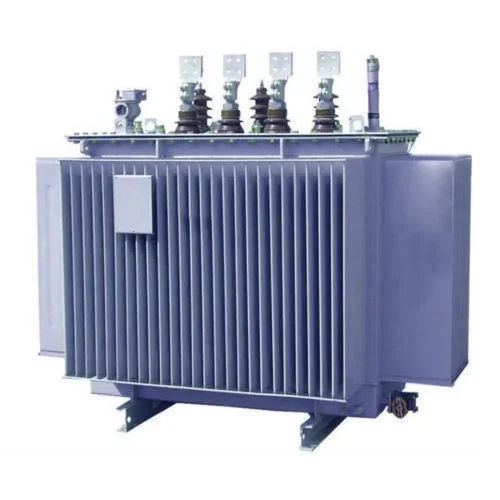
Electrical Power Transformer
Price 2500000.0 INR / Unit
Minimum Order Quantity : 10 Units
Phase : Three Phase
Usage : Industrial
Efficiency : High
Voltage Booster Type : Dry
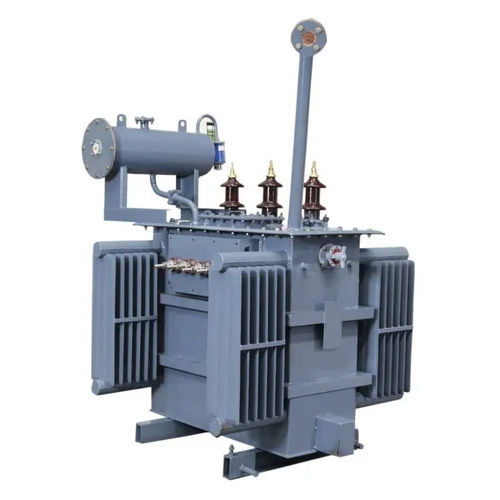
Oil Cooled Transformer
Price 2000000.0 INR / Unit
Minimum Order Quantity : 10 Units
Phase : Three Phase
Usage : Industrial
Efficiency : High
Voltage Booster Type : Dry
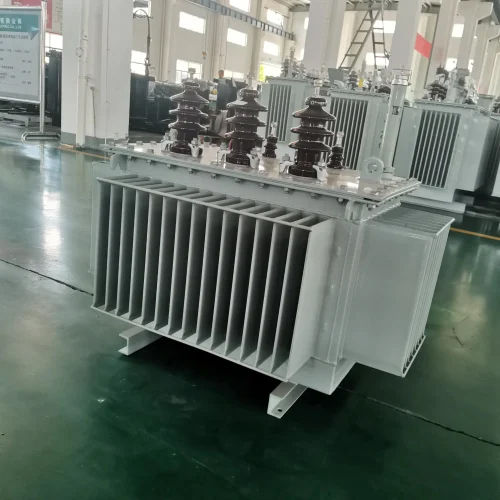
Three Phase Power Transformer
Price 2500000 INR / Unit
Minimum Order Quantity : 10 Units
Phase : Three Phase
Usage : Industrial
Efficiency : High
Voltage Booster Type : Dry
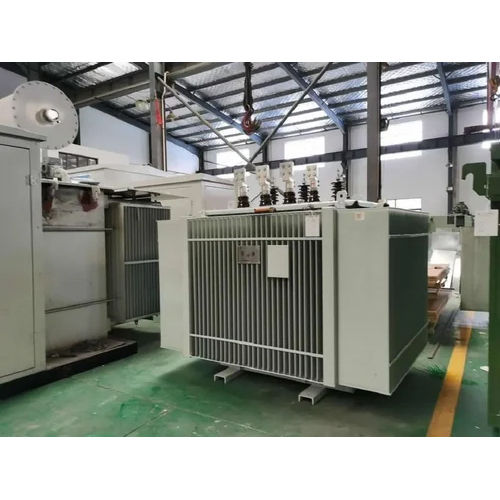
1000 kVA Power Transformer
Price 2000000 INR / Unit
Minimum Order Quantity : 10 Units
Phase : Three Phase
Usage : Industrial
Efficiency : High
Voltage Booster Type : Dry



Contact Details
GST : 06APCPK3923R2ZI
 Send Inquiry
 |
Kamal Transformers
All Rights Reserved.(Terms of Use) Developed and Managed by Infocom Network Private Limited. |
