



|
Three Phase Electric Control Panel

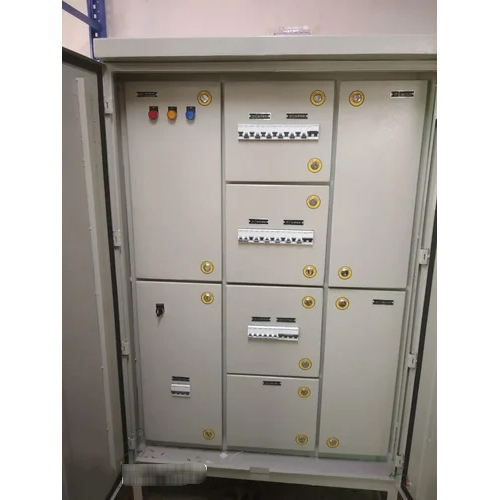
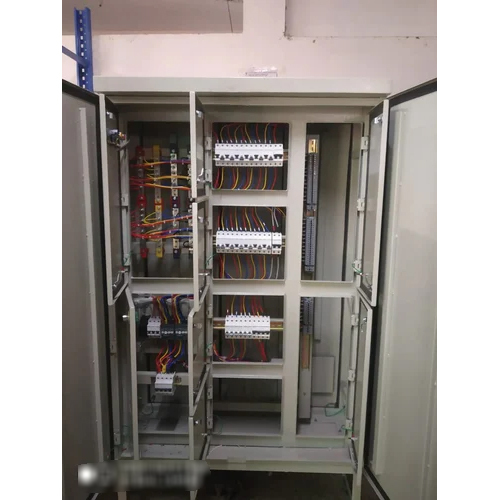

Three Phase Electric Control Panel Specification
- Cover Material
- Stainless Steel
- Protection Level
- IP66
- Base Material
- Metal Base
- Product Type
- Control Box
- Material
- Mild Steel
- Surface Finish
- Painted
- Standard
- Normal
- Surface Color
- White
- Frequency (MHz)
- 50 Hertz (HZ)
- Warranty
- 1 Year
- Application
- Industrial
Three Phase Electric Control Panel Trade Information
- Payment Terms
- Cash on Delivery (COD)
- Supply Ability
- 100 Per Month
- Delivery Time
- 10 Days
- Main Domestic Market
- All India
About Three Phase Electric Control Panel
A Three-Phase Electric Control Panel is an enclosed assembly of electrical components designed to control, monitor, and protect equipment or processes that operate on a three-phase alternating current (AC) power supply. These panels are the nerve centers of industrial, commercial, and often large-scale residential electrical systems, enabling efficient and safe management of machinery, motors, heating systems, lighting, and other loads.
Why Three-Phase Power?
Three-phase power is the standard for most heavy-duty electrical applications because it offers:
- Constant Power Delivery: Provides a more stable and continuous power flow compared to single-phase, reducing vibrations in motors and offering smoother operation.
- Efficiency: More power can be transmitted with less conductor material and smaller wire sizes for the same power output, leading to cost savings.
- Self-Starting Motors: Three-phase motors are inherently self-starting, simplifying motor control circuits.
- Higher Power Capacity: Suitable for large loads like industrial machinery, pumps, HVAC systems, and data centers.
Function of a Three-Phase Electric Control Panel
The primary functions of a three-phase electric control panel include:
- Power Distribution: Receiving incoming three-phase power and safely distributing it to various loads or sub-circuits.
- Control: Providing the means to start, stop, regulate speed, direction, or other operational parameters of connected equipment (e.g., motors, pumps, heating elements). This can be manual, automatic, or programmable.
- Protection: Safeguarding electrical equipment and personnel from electrical faults such as overcurrents, short circuits, overloads, single-phasing, undervoltage, and ground faults.
- Monitoring and Indication: Displaying operational status, fault conditions, and electrical parameters (voltage, current, power factor) through indicators, meters, and human-machine interfaces (HMIs).
- Automation: Integrating with Programmable Logic Controllers (PLCs) or other control systems to automate complex processes and sequences.
Key Components of a Three-Phase Electric Control Panel
A typical three-phase control panel houses a range of components, neatly organized and wired:
-
Enclosure:
- The outer metallic (e.g., mild steel, stainless steel, aluminum) or sometimes non-metallic box that houses all internal components.
- Provides physical protection to the components from dust, moisture, and impact (rated by IP codes like IP44, IP54, IP67).
- Ensures electrical safety by preventing accidental contact with live parts.
- Often powder-coated for durability and corrosion resistance.
-
Main Incoming Disconnect/Circuit Breaker:
- A heavy-duty switch or circuit breaker (e.g., Molded Case Circuit Breaker - MCCB) that serves as the main isolation point for the entire panel, allowing power to be completely cut off for maintenance or emergencies.
- Provides primary overcurrent and short-circuit protection for the panel itself.
-
Power Distribution Components:
- Busbars: Heavy copper or aluminum bars used to distribute the three phases (R, Y, B or L1, L2, L3) and neutral/earth connections throughout the panel.
- Terminal Blocks: Provide organized and secure connection points for incoming and outgoing wires, as well as internal wiring.
- Busbars: Heavy copper or aluminum bars used to distribute the three phases (R, Y, B or L1, L2, L3) and neutral/earth connections throughout the panel.
-
Circuit Protection Devices:
- Miniature Circuit Breakers (MCBs): Provide overcurrent and short-circuit protection for individual branch circuits or smaller loads.
- Fuses: Overcurrent protection devices that melt and break the circuit when current exceeds a safe level.
- Residual Current Devices (RCDs) / Earth Leakage Circuit Breakers (ELCBs): Detect ground faults (earth leakages) and quickly trip the circuit to prevent electric shock.
- Surge Protection Devices (SPDs): Protect against voltage spikes or surges caused by lightning or switching operations.
- Miniature Circuit Breakers (MCBs): Provide overcurrent and short-circuit protection for individual branch circuits or smaller loads.
-
Motor Control Components (for motor-driven systems):
- Contactors: Electrically operated switches that make or break the power circuit to the motor. Controlled by lower-voltage control circuits.
- Overload Relays: Protect motors from sustained overcurrents (overloads) which can lead to overheating and damage. They work in conjunction with contactors.
- Motor Protection Circuit Breakers (MPCBs): Combine the functions of a circuit breaker, overload relay, and disconnect switch for motor protection.
- Motor Starters: Assemblies (e.g., Direct-On-Line (DOL), Star-Delta, Soft Starters, Variable Frequency Drives (VFDs)) that control how a motor starts and runs, managing inrush current and providing speed control.
- Contactors: Electrically operated switches that make or break the power circuit to the motor. Controlled by lower-voltage control circuits.
-
Control Logic Devices:
- Programmable Logic Controllers (PLCs): The "brain" of complex control panels. They are programmable microprocessors that receive inputs from sensors and switches and execute logic to control outputs (e.g., contactors, solenoids) according to a programmed sequence.
- Control Relays: Electromechanical switches used in control circuits to perform logic functions, interlocks, and amplify signals.
- Timers: Used for sequencing operations with time delays.
- Control Power Transformer: Steps down the main three-phase voltage to a lower, safer voltage (e.g., 24V AC/DC, 110V AC) for the control circuit components (PLCs, relays, indicators, pushbuttons).
- Power Supplies: Convert AC control voltage to DC voltage (e.g., 24V DC) for DC-powered components like many PLCs, sensors, and HMI screens.
- Programmable Logic Controllers (PLCs): The "brain" of complex control panels. They are programmable microprocessors that receive inputs from sensors and switches and execute logic to control outputs (e.g., contactors, solenoids) according to a programmed sequence.
-
Human-Machine Interface (HMI) Components:
- Push Buttons: For manual start/stop, emergency stop, reset functions.
- Selector Switches: For selecting operating modes (e.g., Auto/Manual, Local/Remote).
- Pilot Lights/Indicators: LEDs or lamps that show the status of equipment (e.g., Run, Stop, Fault, Power On).
- Meters: Voltmeters, Ammeters, Power Factor Meters to display electrical parameters.
- Touchscreen HMIs: Graphical displays that provide a user-friendly interface for monitoring, control, alarm management, and data logging.
- Push Buttons: For manual start/stop, emergency stop, reset functions.
-
Internal Wiring and Cable Management:
- Wiring Ducts/Trunking: Channels made of plastic or metal used to organize and protect the panel's internal wiring, ensuring a neat and safe layout.
- DIN Rails: Standardized metal rails used for mounting modular electrical components like circuit breakers, relays, and terminal blocks.
How it Works (Simplified Example for a Motor Control Panel)
- Power In: Three-phase power enters the panel through the main incoming circuit breaker.
- Protection: The main breaker provides primary protection. Power is then distributed via busbars to other protective devices (MCBs, Fuses) for individual motor circuits.
- Control Circuit Power: A control power transformer steps down a portion of the incoming three-phase power to a lower, safer voltage for the control logic.
- Motor Control:
- An operator presses a "Start" pushbutton on the HMI or panel door.
- This signal is sent to the PLC (if automated) or directly to a control relay.
- The PLC/relay's logic determines if all safety conditions are met (e.g., no overload, emergency stop not pressed).
- If conditions are met, the PLC/relay energizes the coil of a motor contactor.
- The contactor closes, allowing the three-phase power to flow from the panel to the motor.
- An overload relay (wired in series with the motor's power supply) continuously monitors the motor's current. If it detects an overload, it trips, de-energizing the contactor coil and stopping the motor to prevent damage.
- Pilot lights on the panel indicate the motor's status (e.g., "Running," "Stopped," "Fault").
Applications
Three-phase electric control panels are indispensable across a vast range of industries and applications:
- Manufacturing and Industrial Automation: Controlling production lines, conveyor systems, robotics, CNC machines, pumps, fans, compressors, and process machinery.
- HVAC Systems: Managing large air conditioning units, chillers, and ventilation systems in commercial buildings.
- Water Treatment and Pumping Stations: Controlling pumps, valves, and filtration processes.
- Material Handling: Operating cranes, hoists, and automated storage and retrieval systems.
- Power Generation and Distribution: In switchgear and substation automation.
- Food and Beverage Industry: Controlling mixing, packaging, and processing equipment.
- Agriculture: For irrigation pumps and machinery.
- Building Management Systems (BMS): Integrating and controlling various building services.

Price:
- 50
- 100
- 200
- 250
- 500
- 1000+

More Products in Electrical Control Panel Category
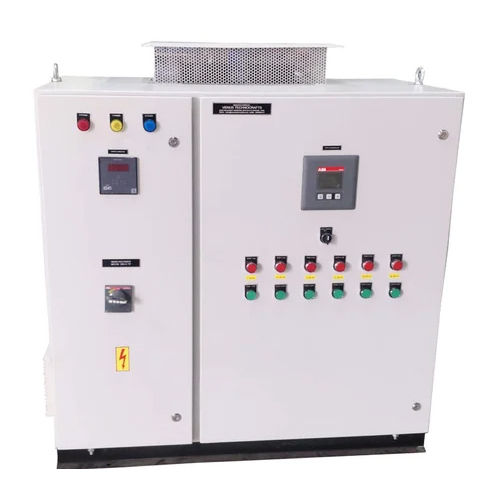
Automatic Power Factor Control Panel
Price 150000.0 INR / Unit
Minimum Order Quantity : 10
Standard : Normal
Protection Level : IP66
Base Material : Metal Base
Surface Finish : Painted




Contact Details
GST : 06APCPK3923R2ZI
 Send Inquiry
 |
Kamal Transformers
All Rights Reserved.(Terms of Use) Developed and Managed by Infocom Network Private Limited. |
